Wednesday, September 4, 2013

Junk Food May Limit Children's Intelligence and Learning Ability


There is a clear impact of nutrition on the potential development of Alzheimer's disease and other late-life cognitive disorders.  Green vegetables, berries, and other plant foods reduce risk, whereas animal products and processed foods increase risk.1-4  However, the damaging effects of unhealthy foods on the brain occur throughout life.  Research now suggests that the typical American childhood diet including burgers, pasta, pizza, chicken nuggets, french fries, processed sweetened cold cereals, sweets and soda negatively affects school performance and learning. Overall math performance in the U.S. lags far behind many other developed nations5, and it is likely that the nutrient-poor American diet is a significant contributing factor.


We as parents are strongly committed to supporting our children’s academic achievement. We want the best for our children, and we take an active interest in their schooling; we do everything we can to make sure that they will be well educated and able to compete as working adults in our increasingly technological world. However, how many parents think about the impact of the foods they give their children on their academic performance?

Early childhood:
Parents must give their children’s brains the right raw materials with which to learn – and start early. Breast milk provides a DHA-rich foundation for a healthy brain, and when solid foods are added, their nutritional quality is of paramount importance for the brain’s continued development. Several studies have now found that dietary patterns in early childhood affect IQ scores years later. In one study, greater consumption of fruits and vegetables upon introducing solid foods was associated with higher IQ and better memory skills when at 4 years of age.6 Similarly in another study, children who regularly ate cookies, chocolate, other sweets, soda, and chips during the first two years of life showed decreased IQ at age 8 compared to children who did not eat these foods. Nutrition during this formative period has a meaningful long-term effect, providing building blocks to construct the growing brain.7 The brain is highly susceptible to oxidative stress, so a healthful, antioxidant-rich diet is especially beneficial for the brain and is likely involved in this link between natural plant foods and higher IQ scores.

Teenage years:
Young children who are fed processed, nutrient-poor foods are likely to become unhealthy teenagers, and eventually unhealthy adults. Now twenty-three percent of teens in the U.S. are prediabetic or diabetic, 22% have high or borderline high LDL cholesterol levels, and 14% have hypertension or prehypertension.8
A recent study tested cognitive abilities and performed brain MRIs on teens with and without metabolic syndrome, a combination of at least three diet-related metabolic abnormalities among a list including insulin resistance, high triglycerides and hypertension. The teens with metabolic syndrome had lower spelling and math scores, lower IQs, and reduced attention span. Their brain MRIs showed a smaller hippocampus, especially in those with insulin resistance – extremely important since the hippocampus is a part of the brain involved in learning new information.9  This means that our American obesity-promoting, diabetic promoting diet actually can cause parts of the brain to shrink.  The researchers concluded that insulin resistance and other components of the metabolic syndrome, as a result of a poor diet, may impair teenagers’ academic performance, and maybe even their learning abilities throughout their lifetime.

The time to feed your children healthfully is now. A diet rich in greens, berries, other fruits and vegetables, beans, nuts and seeds is the only way to ensure that children get the array of phytochemicals, antioxidants, fatty acids and other micronutrients to adequately supply their growing and constantly learning brains.  Junk food is not for kids.


References:

1. Otsuka M, Yamaguchi K, Ueki A. Similarities and differences between Alzheimer's disease and vascular dementia from the viewpoint of nutrition. Ann N Y Acad Sci 2002;977:155-161.

2. Morris MC, Evans DA, Bienias JL, et al. Dietary fats and the risk of incident Alzheimer disease. Arch Neurol 2003;60:194-200.

3. Joseph JA, Shukitt-Hale B, Willis LM. Grape juice, berries, and walnuts affect brain aging and behavior. J Nutr 2009;139:1813S-1817S.

4. Devore EE, Kang JH, Breteler MM, et al. Dietary intakes of berries and flavonoids in relation to cognitive decline. Ann Neurol 2012.

5. University of Southern California: U.S. Education Spending and Performance vs. the World. [Infographic]. http://mat.usc.edu/u-s-education-versus-the-world-infographic/. Accessed October 12, 2012.

6. Gale CR, Martyn CN, Marriott LD, et al. Dietary patterns in infancy and cognitive and neuropsychological function in childhood. J Child Psychol Psychiatry 2009;50:816-823.

7. Smithers LG, Golley RK, Mittinty MN, et al. Dietary patterns at 6, 15 and 24 months of age are associated with IQ at 8 years of age. Eur J Epidemiol 2012;27:525-535.

8. May AL, Kuklina EV, Yoon PW. Prevalence of Cardiovascular Disease Risk Factors Among US Adolescents, 1999-2008. Pediatrics 2012;129:1035.

9. Yau PL, Castro MG, Tagani A, et al. Obesity and metabolic syndrome and functional and structural brain impairments in adolescence. Pediatrics 2012;130:e856-864.
  
Moms have long known that what their kids eat can promote physical health, but their diet can also be the key to mental well-being. As back-to-school time approaches, incorporating these brain foods into daily meals is a delicious way to provide the nutrients necessary for learning, memory and other cognitive functions.  
           A healthy breakfast including eggs gets kids off to a good start. This classic morning favorite is rich in choline, a substance that contributes to the creation of memory stem cells, and the high protein content helps kids to focus. Wrapping scrambled eggs in a burrito makes them fun to eat. As a bonus, it’s portable so they can eat it on the go.
           Oatmeal’s high fiber content means that it digests slowly, providing a steady supply of glucose to maintain energy levels instead of the spike-and-crash that results from sugary foods. Kids who find it to be too bland will love this baked oatmeal layered with fruit. Blueberries add an extra boost of potassium and vitamin C, two more elements important for brain health.
           Salmon contains high levels of omega-3 fatty acids, an essential component of brain development and heart health as well as a natural mood elevator. Moms who may be skeptical of getting their kids to eat fish will be surprised with the results when they disguise it as a “burger”. Using buns with zinc-laden sesame seeds doubles up on the brain food factor.
           Turkey isn’t just for Thanksgiving. It contains tyrosine, which contributes to alertness, along with tryptophan, which is a natural mood regulator and promotes quality sleep. Adding turkey to a favorite dish like pizza makes it even more appealing. It’s also a way to sneak in some nutrient-rich leafy green vegetable such as spinach.
           Brain food can also be used for snacks that kids will enjoy. Beans and other iron-rich foods help to improve focus and memory. This bean dip is simple to make and pairs well with crunchy tortilla chips. The choice of salsa makes it easy to adjust the heat to a kid-friendly level.
Doing well in school is job number one for kids. Moms who plan their menus to include these powerful brain foods help them perform at their peak.


Article Retrieved:
http://www.diseaseproof.com/archives/children-junk-food-may-limit-childrens-intelligence-and-learning-ability.html?utm_source=feedburner&utm_medium=feed&utm_campaign=Feed%3A+DiseaseProof+%28Disease+Proof%29

Picture retrieved from:http://www.bing.com/images/search?q=healthy+food&qs=n&form=QBIR&pq=healthy+food&sc=8-8&sp=-1&sk=&id=6C28CBB99C751EAD7CB5AA0C7BD2FCE45139D829&selectedIndex=15#view=detail&id=6C28CBB99C751EAD7CB5AA0C7BD2FCE45139D829&selectedIndex=0
and
http://terriskitchenuk.files.wordpress.com/2012/01/fast-food.jpg

Tuesday, August 13, 2013

Tantrums, Meltdowns and More: Executive Dysfunction and Behavior


By Bonnie Goldsmith


My child doesn’t seem able to read body language. He often misunderstands how other people are reacting to him.

My teen has regular meltdowns, even when minor things go wrong.

My child is forever getting time-outs for disrupting the classroom by calling out, interrupting and refusing to take turns.

Does this describe your child?

Executive function skills allow us to control our impulses and emotions, be flexible, plan and organize. These cognitive skills are not only crucial for learning but play an important role in day-to-day behavior. Children who struggle with executive function may have great difficulty in behaving appropriately in classrooms, at home and in other settings.

Think about a child who gets a reputation as a class troublemaker. This is a child who responds excessively to everything, good or bad. He is impulsive and prone to temper tantrums. He does not respond well to change and seems to not be able to control his emotions. Plenty of people would point to this class troublemaker and say his behavior is the result of being lazy, undisciplined, or spoiled. But the truth is more complicated: This child may be deficient in the executive skills most closely related to social and emotional growth, including impulse control, emotional control, flexibility and self-monitoring. Executive skill delays are directly associated with emotional and behavioral challenges.

As you may know, executive function deficits are very common in children with LD and ADHD. You’ve probably already considered how executive dysfunction may play a role in your child’s learning and academic performance. But it’s crucial to consider the role executive function may be having on your child’s behavior. This will help you avoid the common trap of treating all inappropriate behavior as something under your child’s control (He’s just a lazy, spoiled brat) and move toward finding solutions to help your child improve her executive function skills and behave in more positive ways. Executive skill development is gradual and developmental, not automatic. Children and teens with LD or ADHD need extra help in many areas of life, including the development of self-control, resilience, and sensitivity towards their own and others’ feelings.

Controlling Impulses and EmotionsWe all speak and act impulsively at times, and who hasn’t had to apologize for doing so? But every time you consider of the consequences of an action before you do it or hold back a comment until an appropriate time, you’re exercising an important executive skill: the ability to control your impulses. This can be a huge challenge for Children and teens who struggle with executive function, and especially for those with ADHD (impulsiveness is one sign of the disorder). Children and teens lacking in impulse control have a diminished ability to regulate their speech and behavior. They find it difficult to stop and think. They haven’t learned to ask themselves: What is happening here? When this happened to me before, what did I do? If I say this or do that, will I help the situation or make it worse? Children and teens who struggle with impulse control often have difficulty following rules and directions and sitting still in class. They may seem to talk incessantly and interrupt others.

Closely linked to impulse control is emotional control, the ability to manage our emotions so they don’t control our lives. When your child isn’t invited to a birthday party or when your teen gets a speeding ticket, frustration and anger—even fear—are normal emotional reactions. However, throwing a tantrum, becoming silent and withdrawn, or arguing with a police officer are unproductive, self-destructive ways to react. The ability to monitor emotions so they don’t spill out and cause embarrassment or worse is a crucial executive skill that helps avoid difficulty in all kinds of interpersonal situations.

A child who struggles with emotional control may have a low threshold for frustration. He may overreact to obstacles that wouldn’t affect other children. Without a strong capacity for emotional control, your child’s overreactions may rapidly escalate, leading to rage, tears, or withdrawal. Even happiness may affect your child differently, leading to excessive giddiness or silliness.

Flexibility and Self-MonitoringDoes your child’s behavior get worse during school breaks or vacations, when he is away from his normal routine? Does your child struggle with understanding the difference between an “outdoor” and “indoor” voice? These difficulties may be related to executive function: cognitive flexibility, or the ability to think flexibly and to shift approaches, is another executive function process that can lead to behavioral problems when it breaks down.

Think of it this way: every time you switch from one activity or setting to another, you know that there are a different set of rules and expectations for how you will act. You wouldn’t behave exactly the same way in a meeting with your boss as you would when you’re out to lunch with your co-workers. Children and teens who struggle with this aspect of executive function have trouble shifting their behavior from one situation to the next. For example, while running might be okay at recess, it’s definitely against the rules in school hallways. But a child with executive dysfunction may have trouble switching from “recess behavior” to “classroom behavior,” continue to run when recess is over, and get in trouble for doing so.

Promoting Positive Behavior in Children With Executive Dysfunction With parents’ guidance and support, children and teens can improve their executive functioning skills and move toward improving their behavior. Here are some tips to help.
  • Make sure your child receives a comprehensive assessment including aspects of executive function and behavior. Based on the results, you and school staff members can determine the most important behavioral skills your child needs to work on. A focus on executive function skills can improve not only your child’s behavior, but his academic performance as well. If your child has an IEP or 504 plan, be sure that specific executive skill guidelines are included.
  • Communicate with teachers and other school staff about your efforts to help your child regulate his or her behavior.. You and your child’s teacher or counselor may decide to work on the same skill at the same time. Home and school need to reinforce each other.
  • Set clear and consistent rules. Your child or teen needs to know what language or behavior you won’t accept (for example, violence, name-calling, abusive or profane language, door-slamming, harming himself or others). Discuss consequences for breaking the rules and be consistent in applying them. Beyond this zero-tolerance list, treat any tantrums or meltdowns as problems to be solved cooperatively. Research clearly shows that the best way to see improvements in social skills is to give your child positive reinforcement.
Bonnie Z. Goldsmith earned a doctorate in English from Ohio State University. She has worked in the field of education throughout her professional life, as a writer, editor and teacher. She lives in Minneapolis.

Article retrieved from:  http://www.ncld.org/types-learning-disabilities/executive-function-disorders/executive-dysfunction-behavior-problems?utm_source=newsletter_august_6_2013&utm_medium=email&utm_content=title&utm_campaign=ldnews

Image retrieved from: http://yourparentinghelp.com/wp-content/uploads/2011/09/tantrum.jpg

Monday, August 12, 2013

How Executive Dysfunction Can Cause Trouble Making Friends


By Bonnie Goldsmith

Children are expected to mature cognitively and emotionally as well as physically. Generally, as children grow older, their executive function skills like planning, organizing, strategizing and self-monitoring improve. But many children with learning disabilities (LD) and ADHD lag behind their peers in these skills. Executive dysfunction can lead to a variety of problems with academics and behavior. Everyday tasks likesharing, taking turns, picking up on subtle social cues and staying attentive in class can be very difficult for kids who struggle with executive skills. And when children and teens falter in these basic social interactions, it can hurt them socially—isolating them from peers and making it difficult for them to make and keep friends.
Difficulties in the social realm can cause your child pain and embarrassment and are particularly painful to witness as a parent. Everyone needs to feel liked and accepted, and children and teens may react to social disappointments with feelings of isolation, helplessness, sadness and anger. The good news is that you can help your child handle the social challenges that can come along with executive dysfunction, just as you assist your child with academic difficulties.

What Is Social Competence?Children who are socially competent:
  • Are aware of the importance of body language and nonverbal communication
  • Have control of their emotions and impulses—they can “stop and think 
  •  Have the ability to think through a situation and recognize others’ points of view
  • Show flexibility in the face of changed plans and unexpected situations
  • Can anticipate what will happen as a result of their words or actions
  • Are able to take responsibility for their behavior
Executive dysfunction can throw a wrench into all of these skills. For example, a child with weak working memory will likely struggle to think through a social situation before taking action. A teenager who has difficulty with self-monitoring may not be able to judge other’s reactions to his body language and voice volume and adjust what he’s doing accordingly. A middle schooler who struggles with thinking flexibly may become very upset when a plan or routine changes.

Why Can Social Life Be So Difficult For Kids With Executive Dysfunction?
Research has shown that children and teens whose executive skills are underdeveloped are:

    More likely then their peers to behave in socially unacceptable ways (e.g. saying “the wrong thing at the wrong time,” running into things and people, talking rapidly and excessively, continuing to roughhouse after peers have stopped)
  • Less able to solve interpersonal problem
  • Less likely to consider the consequences of their behavior
  • Less likely to understand nonverbal communication, such as facial expression and tone of voice, or to interpret what others say
  • Less adaptable to new social situations 
  •  Less able to tolerate frustration and failure
Many of these characteristics are so troublesome because they can lead to rejection from peers. Consider the following circumstances:
·         Adam is 16 and has great difficulty controlling his impulses to call out at inappropriate times during class. He wants to make other kids laugh, but lately, they have been avoiding him. Some of his friends have noticed that they tend to get in trouble when they sit with Adam in class. Other kids think that Adam is very immature—the screaming and roughhousing might have been funny when they were younger, but now it just seems silly. Adam’s mom is concerned that he has many fewer friends than he did in middle school.
·         Alana is a third grader who has trouble with working memory. She plays in a youth soccer league, and at a recent game, the ball was passed to her. She was very excited, but couldn’t quickly recall what she was supposed to do next. She just knew she was supposed to kick the ball into the net—but unfortunately, she kicked it into her own team’s net. The other girls on the team were mad that Alana inadvertently scored a point for the opposing team. “What’s wrong with you?” one girl yelled as Alana sadly walked off the field. After the game, Alana’s dad overheard a girl whispering that Alana is “weird” and “stupid.”

Adam and Alana both faced peer disapproval because of their actions caused by their executive dysfunction. They’re thought of as “weird” and avoided by other kids—an isolating and painful situation.
If your child faces similar obstacles, get tips on dealing with executive dysfunction-related social skills.
 -----------------------------------------------------------------------------------------------
Bonnie Z. Goldsmith earned a doctorate in English from Ohio State University. She has worked in the field of education throughout her professional life, as a writer, editor and teacher. She lives in Minneapolis.

Article retrieved from: http://www.ncld.org/types-learning-disabilities/executive-function-disorders/executive-dysfunction-trouble-making-friends?utm_source=newsletter_august_6_2013&utm_medium=email&utm_content=title&utm_campaign=ldnews

Image retrieved from: http://homeschoolhappy.com/images/2012/07/iStock_000017812712Medium.jpg

Wednesday, June 5, 2013

Lower Autism Risk With Folic Acid Supplements in Pregnancy


Feb. 12, 2013 — Women who took folic acid supplements in early pregnancy almost halved the risk of having a child with autism. Beginning to take folic acid supplements later in pregnancy did not reduce the risk. This is shown in new findings from the ABC Study and Norwegian Mother and Child Cohort Study published in the Journal of The American Medical Association (JAMA).

Women who took folic acid supplements from four weeks before conception to eight weeks into pregnancy had a 40 per cent lower risk of giving birth to children with childhood autism (classic autism). Use of folic acid supplements midway through pregnancy (week 22) had no effect.

The findings only apply to a lower risk of childhood autism, the most severe form of autism. The results show no reduction in the risk of atypical or unspecific autism. The study also investigated the prevalence of Asperger syndrome, but the number of examined children was too low to give a reliable result.

Food and other supplements did not reduce risk
The researchers found no connection between childhood autism and intake of other supplements during pregnancy. They also found no correlation with maternal intake of folate through food.
"It appears that the reduced risk of childhood autism only reflects folic acid supplements, not food or other supplements, and that the crucial time interval is from four weeks before conception to eight weeks into pregnancy," says Dr Pål Surén, primary author of the paper and researcher at the Norwegian Institute of Public Health.

Clear results that pave the way for further research
The results show an association between the use of folic acid supplements in the mother during pregnancy and a reduced risk of childhood autism.
"The study does not prove that folic acid supplements can prevent childhood autism. However, the findings are so apparent that they constitute a good argument to further examine possible causal mechanisms. It should also be ascertained whether folic acid is associated with a reduced risk of other brain disorders in children," says Surén.

Emphasises the importance of folic acid supplements
The results support the Norwegian Directorate of Health's recommendations for folic acid supplements during pregnancy and emphasise the importance of starting early -- preferably before conception.

Method
The ABC Study included participants in the Norwegian Mother and Child Cohort Study (MoBa) who were born in 2002-2008, and included a total of 85,176 children. The mothers had given detailed information about their diet and the use of supplements in early pregnancy. Children with autism diagnoses in MoBa were identified through questionnaires, referrals from parents and health personnel and through links to the Norwegian Patient Register. When the analyses were done, 270 children with autism diagnoses were identified in the study population. Of these children, 114 children had autism, 56 had Asperger syndrome and 100 had atypical or unspecified autism.

The use of folic acid supplements in early pregnancy increased sharply from 2002 to 2008 among women who participated in the Norwegian Mother and Child Cohort Study. 43 per cent of mothers took folic acid supplements in 2002, while the percentage had risen to 85 per cent in 2008. However, many women began later than is desirable; only half of women who took folic acid supplements had begun before conception.

About the study
The ABC study is conducted by the Norwegian Institute of Public Health in collaboration with Columbia University in New York and the National Institute of Neurological Disorders and Stroke (NINDS) in Bethesda, USA. The study received funding from NINDS. In addition, funds for research analysis were provided by the Norwegian Research Council. MoBa is managed by the NIPH.

The Norwegian Directorate of Health recommends that women who are planning to become pregnant should take folic acid supplements from one month before conception and during the first three months of pregnancy.

The recommendation is based on research showing that the use of folic acid supplements in early pregnancy protects the fetus from spina bifida and other neural tube defects.
In recent years, researchers have begun to investigate whether folic acid supplements may also have other beneficial effects on the development of the brain and spinal cord in the fetus. A study from the Norwegian Mother and Child Cohort Study showed that mothers who took folic acid supplements early in pregnancy halved the risk of having children with severe language delay at three years-old. A study of autism spectrum disorders from California found a lower risk of autism among children of expectant mothers who had taken multivitamin supplements containing folic acid.

Background Information:
Folic acid is a B vitamin that is essential for the construction and repair of DNA molecules, the genetic material which controls all body cells.

Folate is the naturally occurring form of folic acid and is found in leafy vegetables, peas, lentils, beans, eggs, yeast and liver.

For most pregnant women, folic acid supplements are required to reach the recommended levels of folate in the blood.

Some countries add folic acid to flour, so that the entire population receives a supplement, but this is not done in Norway.

Studies from other countries show that many pregnant women consume less dietary folate than is necessary to prevent neural tube defects.


Article retrieved from: http://www.sciencedaily.com/releases/2013/02/130212172209.htm
Image retrieved from: http://www.magnetstreet.com/baby-blog/wp-content/uploads/2009/03/pregnant-belly-300x300.jpg
and http://healthypalm.com/wp-content/uploads/2012/06/Pregnancy-Supplements.jpg

Wednesday, May 22, 2013

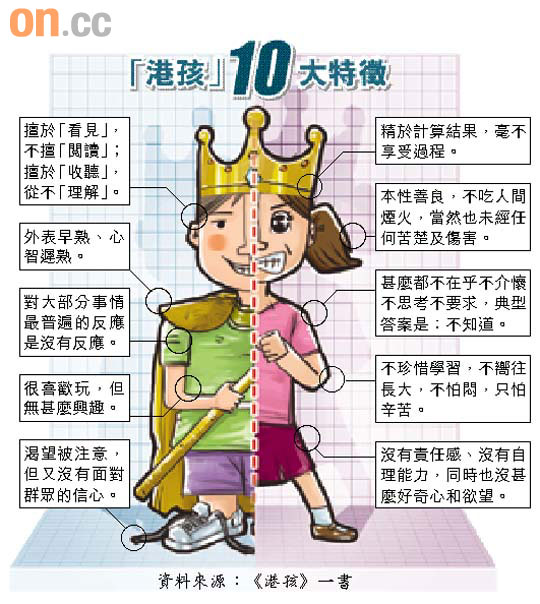
別讓這10種溺愛~毀掉你的孩子!


蔡禮旭老師  
 
1.特殊待遇
孩子在家庭中的地位高人一等,處處特殊照顧,如吃「獨食」,好的食品放在他面前供他一人享用;做「獨生」,爺爺奶奶可以不過生日,孩子過生日得買大蛋糕,送禮物……這樣的孩子自感特殊,習慣於高人一等,必然變得自私,沒有同情心,不會關心他人。

2.過分注意
一家人時刻關照他,陪伴他。過年過節,親戚朋友來了往往嘻笑逗引沒完,有時候大人坐一圈把他圍在中心,一再歡迎孩子表演節目,掌聲不斷。這樣的孩子自認為 自己是中心,確實變成「小太陽」了。家裡人都要圍著他轉,並且一天到晚不得安寧,注意力極其分散,「人來瘋」也特別嚴重,甚至客人來了鬧得沒法談話。

3.輕易滿足
孩子要什麼就給什麼。有的父母還給幼兒和小學生很多零花錢,孩子的滿足就更輕易了。這種孩子必然養成不珍惜物品、講究物質享受、浪費金錢和不體貼他人的壞性格,並且毫無忍耐和吃苦精神。

4.生活懶散
允許孩子飲食起居、玩耍學習沒有規律,要怎樣就怎樣,睡懶覺,不吃飯,白天游遊盪盪,晚上看電視到深夜等。這樣的孩子長大後缺乏上進心、好奇心,做人得過且過,做事心猿意馬,有始無終。

5.祈求央告
例如邊哄邊求孩子吃飯睡覺,答應給孩子講3個故事才把飯吃完。孩子的心理是,你越央求他他越扭捏作態,不但不能明辨是非,培養不出責任心和落落大方的性格,而且教育的威信也喪失殆盡。


6.包辦代替
捨不得讓孩子自己做事,所以三四歲的孩子還要喂飯,還不會穿衣,五六歲的孩子還不做任何家務事,不懂得自己動手的愉快和幫助父母減輕負擔的責任,這樣包辦 下去,對孩子的未來是沒有任何好處的。將來孩子長大要獨立生活時,您過去的包辦代理就會害了孩子,孩子不能獨立生活的例子比比皆是,這決不是聳人聽聞。

7.大驚小怪
本來「初生牛犢不怕虎」,孩子不怕水,不怕黑,不怕摔跤,不怕病痛。摔跤以後往往自己不聲不響爬起來繼續玩。後來為什麼有的孩子膽小愛哭了呢?那往往是父母和祖父母造成的,孩子有病痛時表現驚慌失措,嬌慣的最終結果是孩子不讓父母離開一步。這些孩子就打下懦弱的烙印了。

8.剝奪獨立
為了絕對安全,父母不讓孩子走出家門,也不許他和別的小朋友玩。更有甚者,有的孩子成了「小尾巴」,時刻不能離開父母或老人一步,摟抱著睡,偎依著坐,馱 在背上走;含在嘴裡怕融化,吐出來怕飛走。這樣的孩子會變得膽小無能,喪失自信,養成依賴心理,但在家裡橫行霸道,到外面膽小如鼠,造成嚴重性格缺陷。

9.害怕哭鬧
由於從小遷就孩子,孩子在不順心時以哭鬧、睡地、不吃飯來要挾父母。溺愛的父母就只好哄騙,投降,依從,遷就。害怕孩子哭鬧的父母是無能的父母;打罵爸媽的孩子會變成無情的逆子,在性格中播下了自私、無情、任性和缺乏自制力的種子。

10.當面袒護
有時爸爸管孩子,媽媽護著:「不要太嚴了,他還小呢。」有的父母教孩子,奶奶會站出來說話:「你們不能要求太急,他大了自然會好;你們小的時候,還遠遠沒 有他好呢!」這樣的孩子當然是「教不了」啦!因為他全無是非觀念,而且時時有「保護傘」和「避難所」,其後果不僅孩子性格扭曲,有時還會造成家庭不睦。


文章转自:https://www.facebook.com/photo.php?fbid=268552763290292&set=a.101286533350250.2113.100627876749449&type=1&theater
图片转自:http://ext.pimg.tw/craburgerm/d554e8fe89234304da8f2b1dc4e79aee.jpg & http://the-sun.on.cc/cnt/news/20100720/photo/0720-00407-033b2.jpg

Tuesday, May 21, 2013

別逼孩子學孔融

作者:洪蘭 2013.05.01

《親子天下》最近做了一個有趣的調查,孩子的頭號「民怨」是什麼?結果答案是「不公平」:明明是我的,為什麼要讓給弟妹? 


不公平是我們在研究上看到孩子叛逆最主要的原因,連動物都會「不平則鳴」。我曾看過一個孩子把分給他的蛋糕全部塞進嘴裡,吃相很難看,我就跟他說:「分給你的都是你的,不要一次全塞進嘴裡,小心噎到。」他用力把蛋糕嚥下去後,說:「老師,你不知道,不放進我的嘴裡就不是我的。」盤子裡有根雞腿,他塞不進嘴,就吐點口水抹在雞腿上,這樣別人就不敢吃了。我找他母親談時,他母親理直氣壯的說:「我要教他學孔融呀!」 


孔融讓梨是兄友弟恭的美談,但這是例外,不是常態,若是常態就不會上歷史課本了。不公平是很多不幸的發生原因,父母可想一想,弟弟平常被人讓慣了,出了社會,誰要讓他?所以孩子若願意讓,父母要褒揚他,他若不願意,不可以強迫他,一強迫就不公平了。 


 孩子叛逆的第二個原因是父母不能以身作則,常常說一套做一套,自己在看電視,卻叫孩子去做功課。孩子說:「我們丟掉東西會被罵,大人丟掉東西卻不會,」我朋友的孩子也說:「我打破碗要挨打,爸爸打破碗,不但沒事,我還得替他掃碎片。」


第三個理由是父母在孩子心目中失去了尊敬的地位,父母做了不該做的事被孩子看到了,以後孩子會不服管教。他們最常講的一句話就是:「你憑什麼管我。」 


其實要孩子不叛逆並不難,只要永遠維持在孩子心目中尊敬的地位就可以了。倒是孩子學大人說髒話時要馬上糾正,三歲以下的孩子說髒話,不必打罵,只要擺出生氣面孔,告訴他,你不喜歡這樣,然後走開,他下次就不敢了。


發展心理學家發現孩子會故意壓抑自己的欲望去討好大人,他們其實非常在乎父母的愛,我們常看到剛被罵完的孩子,一邊哭,一邊要母親抱他親他,因為他要確定母親還愛他,結果鼻涕眼淚都糊在媽媽的臉上了。 


至於為何不能如某專家建議的,要等三十分鐘才去禁止孩子說髒話?那是因為事過境遷,失去「時效性」後,處罰無效。從動物實驗中得知,去除一個行為所用的懲罰電擊是要馬上跟隨行為出現才會有效,愈小的孩子愈需要立即處理。 


孩子犯錯時,無論年齡大小,一定要詳細解釋理由,說清楚為什麼不可以,這個理由最後會內化成他的行為準則,也就是他的品德。說髒話不只是「別人以為你在罵他」而是說髒話會讓人看不起你,認為你沒有教養。我們常低估孩子的能力,認為他反正聽不懂,其實理由是很重要的,他只有認同不做的理由,以後才會不做。 


 這份調查給了父母一個反思的機會,請蹲下來,從孩子的角度來看事情,你會發現,孩子雖小,他做事還是有他自己的道理的,請給他機會表達他的看法,也給你自己機會去了解你的孩子。 


文章转载自:http://www.parenting.com.tw/blog/blogTopic.action?id=65&nid=3268 图片转载自: http://www.flixya.com/files-photo/S/h/a/Shahidramzan-1933989.jpg

Tuesday, May 14, 2013

Giving Autism a Voice

Twitter Delicious Facebook Digg Stumbleupon Favorites More